
"green bean defects"
1000 article(s) found

The only boutique coffee variety that is not 100% pure Arabica beans-Manning Coffee
Professional baristas please follow the coffee workshop (Wechat official account cafe_style) in the boutique coffee system, Sumatran coffee is a wonderful presence. You see, the famous Mantenin is not actually the name of the producing area, nor the name of the coffee bean species, and even its bean seed source is so messy (Ateng) is a mess between Arabica and Robusta.

What are defective beans? Reasons for the formation of defective types of raw beans
What are defective beans? Coffee raw beans are often mixed with impurities and bad beans, and these bad beans are what we usually call defective beans. Raw bean defective type ● all-black beans (FullBlack) ◎ characteristics: whole or local raw beans show a black opaque appearance. Cause of ◎ formation: blackening is caused by excessive fermentation, such as fermentation or odor, dusty odor, mildew

Ethiopia Yega Chuefei Coffee introduces Yega Snow Coffee Manor
There is a strict standard for collecting red fruits (as a result of coffee trees). Before exposure to coffee fruits, unripe green fruits or defective fruits are removed manually, and damaged or moldy fruits are removed during the sun drying process. after two weeks, the flesh sugar and essence seeped into the coffee beans, the water content was reduced to 12%, and then scraped off the hardened pulp, pectin layer and pods with a planer to remove the coffee.

An introduction to the characteristics of boutique coffee in the manor area
The beans are small, neat and round. Ethiopian sun beans are generally G3--G5, but the beans are G2, equal to the grade of washed beans. Although there are still a few defective beans, they are commendable compared to the sun beans of Harald and Sidamo. The 2015 sun Yega snow caffeine has appeared in the G1 grade, surpassing the G1 washing in terms of quality and sales. This bean is baked
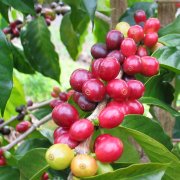
Coffee Grading in Kenya
The growing environment of fine coffee beans also has higher requirements. It generally grows at an altitude of 1500 meters or even 2000 meters above sea level, with suitable precipitation, sunshine, temperature and soil conditions. Some world-famous coffee beans also have special geographical conditions, such as the mountain clouds in the Blue Mountains, the free shade provided by afternoon clouds in Kona, and the volcanic ash soil in Antigua.
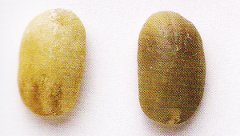
How to choose coffee beans by hand
Apples don't taste different because of size, which I agree with, but in the roasting of coffee beans, it doesn't matter if they're heated anyway. Coffee beans harvested from the same tree, regardless of size

Kenya raw bean wholesale Kenya AA wholesale price Kenya grade fine coffee raw bean
Kenyan coffee has many followers in the boutique coffee industry, and Kenyan AA has an extraordinary popularity. Usually Kenyan coffee is classified as follows: 1) Common categories: coffee fruits picked by hand, picked by hand, picked out immature fruit (unripe), overripe fruit (overripe) and other defects, peeled, fermented for about 36 hours, and placed on a metal grid for a day.
Coffee grading in Kenya
The growth environment of boutique coffee beans also has higher requirements. Generally grow at an altitude of 1500 meters or even more than 2000 meters above sea level, with appropriate precipitation, sunshine, temperature and soil conditions. Some world-famous coffee beans also have a special geographical environment, such as the alpine clouds in the Blue Mountains, the free shade provided by the afternoon clouds in Kona, and the volcanic ash soil in Antigua.

Why pick defective beans? What kind of coffee flavor will defective beans bring?
Professional coffee knowledge exchange more coffee bean information Please pay attention to coffee workshop (Wechat official account cafe_style) Coffee is a crop, so raw coffee beans, naturally there may be many different defects, I believe you to ask any producer or roaster will tell you like this. Fortunately, all these flaws can be distinguished with the naked eye.

Sun-treated Yejia Xuefei Coffee beans introduce Fine Coffee
There is a strict standard for collecting red fruits (as a result of coffee trees). Before exposure to coffee fruits, unripe green fruits or defective fruits are removed manually, and damaged or moldy fruits are removed during the sun drying process. after two weeks, the flesh sugar and essence seeped into the coffee beans, the water content was reduced to 12%, and then scraped off the hardened pulp, pectin layer and pods with a planer to remove the coffee.
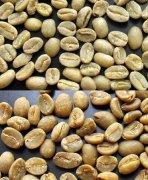
Grading of raw coffee beans there are two ways to grade raw coffee beans.
There are two ways to classify raw coffee beans, one is the filter number, and the other is the elevation. It is divided by the filter number, and the size is size in terms of the screen size. Round beans are generally smaller than flat beans, between 8-13 and 12-29. 8, 9, 10. 12, 13. 18. 29 = small, medium, ordinary. Quasi-big. Big, extra large. The bigger the size, the bigger the beans. Like SC-.

How do you produce the strange smell of coffee?
In the process of brewing coffee, we all look forward to the moving moments full of fragrance: the wonderful and complex aromas of caramel, flowers, berries, nuts, honey, tea and so on are absolutely the most fascinating things about coffee. Coffee beans can detect more than 300 compounds, and there are more than 850 kinds of coffee cooked beans. The complexity is amazing (this data is cited from boutique Coffee) but in baking or brewing.
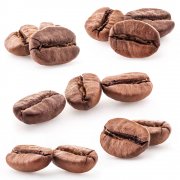
Grading according to the proportion of sieve and defective beans
Grading defective beans according to the ratio of sieve and defective beans is an important factor in destroying the flavor of the final coffee. Therefore, defective beans should also be removed in the final step of green bean processing. Therefore, according to the proportion of defective beans, supplemented by screen size is also used as a classification method. Due to the rise of the fine coffee trend, coffee producing countries are paying more and more attention to the quality of coffee. Controlling defective beans is the most important way.

Third Runner-up of Burundi Excellence Cup | Burundian MUNKAZE COFFEE introduces what is BUJACAF é 15 +
Professional coffee knowledge exchange more coffee bean information please follow the coffee workshop (Wechat official account cafe_style) according to the international panel of judges of the sixth Burundian Excellence Cup quality competition, a domestic record of seven green coffee scored 90 points or more, the competition ended last month in Bujumbura. All the winning coffee in the 2018 Burundian CoE competition

Sweet and spicy Sidamo Coffee Flavor description treatment characteristics of varieties grindability area
1. After picking beans without special screening and treatment, uneven appearance and maturity are mixed together, the process is relatively rough, so the quality of coffee beans is unstable and prone to defective beans. two。 Coffee farmers usually find an open space near their home to deal with it, so there are often a lot of impurities or dirt on the ground, and coffee is easy to get smelly. Improved tanning method

Sweet and spicy Sidamo Coffee Flavor description treatment characteristics of varieties grindability area
1. After picking beans without special screening and treatment, uneven appearance and maturity are mixed together, the process is relatively rough, so the quality of coffee beans is unstable and prone to defective beans. two。 Coffee farmers usually find an open space near their home to deal with it, so there are often a lot of impurities or dirt on the ground, and coffee is easy to get smelly. Improved tanning method
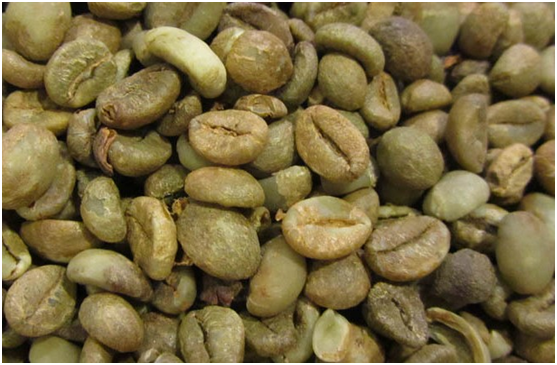
What is the better taste of large granulated beans and small granulated beans?
From the fruit state of coffee beans when they are picked from the tree to the state of raw beans that can be baked, the moisture content of coffee beans will be controlled between 9% and 13%, and it is not easy to bake if the water content is too high or too low. Generally, we get newly collected raw beans with water washing treatment, the moisture content is usually about 11.5% to 12.5%, half-washed Mantenin may reach 13%, and half-washed Brazil is 11% ~ 12% per day.

Introduction to the Flavor characteristics of Ethiopian Yega Snow Coffee
Yega Xuefei Coffee Sun sets a strict standard for collecting red fruits (as a result of coffee trees). Before exposure to coffee fruits, unripe green fruits or defective fruits are manually removed, and damaged or moldy fruits are removed in the process of sunlight. after two weeks, the flesh sugar and essence seep into the coffee beans, the water content is reduced to 12%, and then the hardened pulp, pectin layer and pods are scraped with a planer.

Roasting defects Fast baking freshly baked coffee beans coffee quality coffee raw beans
When we talk about boutique coffee, every step presented in the coffee supply chain is critical to the final coffee product presented to us. So a very important step in the supply chain of coffee from seed to cup is roasting. When it comes to specialty coffee, every step in the supply chain becomes extremel